Planning
What podcast format should you choose?
By the team at The Cast Studio · Updated · 11 min read
In short
Choose the format that fits what you want listeners to do and that you can keep up every week. Solo and educational shows can run on one microphone and one camera angle, interviews and co-hosted shows on two microphones and three angles, and panels need more of both. This guide compares eight formats, with the editing load for each.
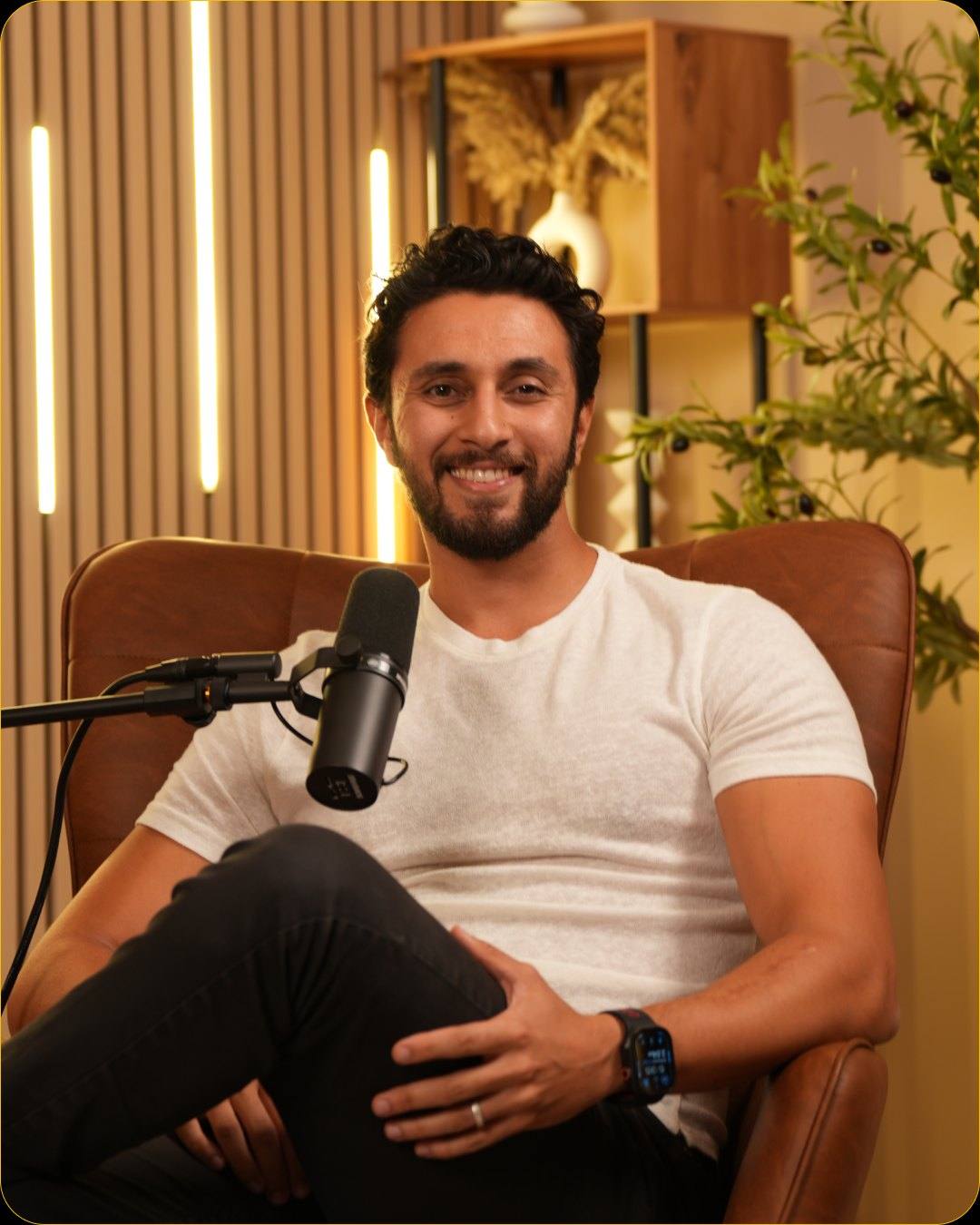
Your podcast format decides who sits at the table, how many microphones and camera angles you need, which studio set suits the show and how long each episode takes to edit. Below, we describe eight formats as a studio sees them, then show how to pick the one you can keep up every week and which set suits it.
What is a podcast format?
A podcast format is the way an episode is built: who talks, how the conversation is structured and how much production goes into it. It is not the same as your topic. A business podcast can be a solo show, an interview show or a panel, and each one asks for a different setup in the studio.
Choosing a format is one of the first steps in our guide on how to start a podcast.
What are the main types of podcast formats?
There are eight main podcast formats: solo, interview, co-hosted conversation, panel, narrative, Q&A, educational and hybrid. The table compares what each one needs at the table and in the edit.
| Format | People on mic | Camera angles that work | Prep needed | Editing load |
|---|---|---|---|---|
| Solo | 1 | 1 | Outline or script | Light |
| Interview | 2: host and guest | 3: one wide, two singles | Guest research and questions | Medium |
| Co-hosted conversation | 2 regular hosts | 3: one wide, two singles | Shared outline and roles | Medium |
| Panel or roundtable | 3 or more | A wide shot, plus singles as angles allow | Moderator, agenda, question order | Heavy |
| Narrative or documentary | 1 narrator at a time | None if audio first, 1 if you film | Full script and research | Heavy |
| Q&A | 1 or 2 | 1 alone, 3 with a second person | A sorted list of questions | Light to medium |
| Educational | 1, sometimes 2 | 1 | Lesson plan or script | Light to medium |
| Hybrid | Varies by segment | Plan for the busiest segment | Run sheet with segment times | Medium to heavy |
Editing load is relative. Light means trimming mistakes and adding an intro and outro. Medium adds cutting between angles and tightening answers. Heavy means balancing several voices or building the episode from separate pieces.
Solo
A solo podcast is one host talking directly to the audience, usually to teach, comment or tell a story. It suits experts and founders who have plenty to say and want to set their own schedule.
In the studio: one person, one microphone and one camera angle.
Prep and edit: write an outline, or a script for the parts that must be exact. The solo outline in our podcast script template is a place to start. The edit is light: trim stumbles, then add an intro and outro.
Watch for: nobody interrupts you, so it is easy to ramble. Decide where the episode ends before you record.
Interview
An interview podcast is a host and a guest: the host asks, the guest answers and the conversation follows the guest's story. It suits hosts who want a new voice and a new topic in every episode.
In the studio: two microphones and, on video, three angles: one wide shot and a single of each speaker.
Prep and edit: research the guest and write a short list of questions; our podcast interview questions cover openers, follow-ups and closers. The edit is medium: more angles to cut between and answers to tighten.
Watch for: you depend on the guest's calendar. Keep a few guests lined up so one cancellation does not stop an episode.
Co-hosted conversation
A co-hosted podcast has two regular hosts who talk with each other about a topic. It suits friends, colleagues or partners with real chemistry.
In the studio: two microphones and, on video, three angles, as for an interview. The same two people appear in every episode, so the set becomes part of the show's look.
Prep and edit: agree on roles (who leads, who reacts, who watches the clock) and keep a shared outline. The edit is medium: mostly trimming tangents and keeping the pace up.
Watch for: two schedules to align. A fixed recording day helps.
Panel or roundtable
A panel, or roundtable, brings three or more voices to one topic, usually with a moderator who steers the conversation. It suits discussions and debates where several viewpoints matter more than one expert's answer.
In the studio: one microphone per person, so for three or four voices, ask to add microphones when you book. On video, a wide shot of the table anchors the episode, with singles added as your angle count allows.
Prep and edit: pick a moderator, write an agenda and fix the order of questions so one voice does not take over. The edit is heavy: more audio tracks to balance, more angles to cut and crosstalk to sort out.
Watch for: panels drift and run long. Give each voice a role, and book extra time to settle everyone in.
Narrative or documentary
A narrative podcast is scripted and produced: a story told through narration, recorded interviews and sound rather than an unscripted conversation. It suits investigations, history and case studies, and it is often built for audio first.
In the studio: mostly voice recording. The narrator reads the script into one microphone, and the session is about clean, consistent audio, not camera angles. Other voices are usually recorded separately.
Prep and edit: the most work of the eight. You research, write and revise the script first, then build the episode in the edit. The studio hour is the short part.
Watch for: time. A scripted show takes far more time per episode than a conversation, so check that you can hold your schedule.
Q&A or listener questions
A Q&A podcast answers questions from your audience, customers or clients, one after another. It suits experts, coaches and businesses that hear the same questions again and again.
In the studio: it depends on who answers. One expert alone needs one microphone and one angle. With a host who reads the questions, it is a two-person show: two microphones and three angles.
Prep and edit: collect questions in advance from emails, comments and social posts, sort them by theme and pick the ones worth a full answer. The edit is light to medium.
Watch for: running out of questions. Keep a running list, and ask for more at the end of every episode.
Educational or course-style
An educational podcast teaches one skill or idea per episode, often as a series where lessons build on each other. It overlaps with talking head video: one instructor, one camera, explaining something clearly.
In the studio: one instructor, one microphone and one angle, as for a solo show.
Prep and edit: write a lesson plan for each episode, with the one thing the listener should be able to do afterward. The edit is light to medium: cut mistakes and add on-screen titles where a lesson needs them.
Watch for: lessons that sprawl. One lesson per episode keeps each one easy to find and to record.
Hybrid or segment-based
A hybrid podcast mixes formats inside one episode through recurring segments, so every episode has the same structure: for example, a short solo opening, an interview and a round of listener questions. It suits shows that want variety without changing the show's promise.
In the studio: plan the setup for the busiest segment. If one segment has a guest, set up two microphones and three angles for the whole recording.
Prep and edit: write a run sheet with the segments, their order and a time limit for each. The edit is medium to heavy, because every format you add brings its own edit with it.
Watch for: too many segments. Start with two or three, and drop any you dread editing.
How does your format change on video?
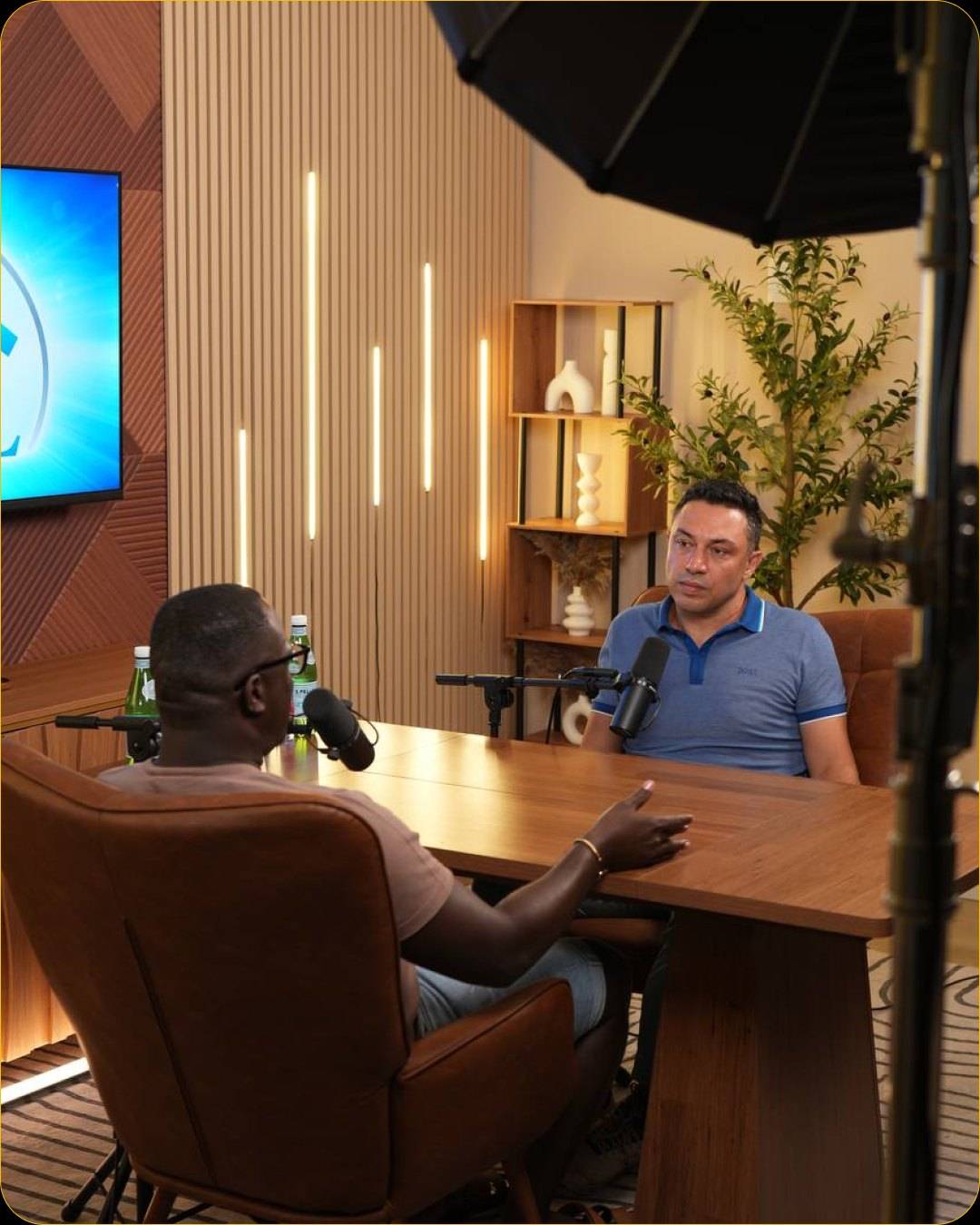
On video, the format decides how many camera angles you need. A solo show can work on one angle. An interview or a co-hosted conversation holds attention with three: one wide shot and a single of each speaker, so an editor can cut to whoever is talking and to the reaction of the person listening.
A panel starts with a wide shot of the whole table, and a narrative show is usually audio first, so video is optional.
Our guide to podcast camera setup shows where to place and frame each camera. The video podcast studio page describes the cameras, lights and audio gear you record with at The Cast Studio in Fort Lauderdale.
How do you choose a format?
Choose the format that matches what you want listeners to do, then check it against your prep time, your plans for video and the schedule you can keep. Start with the goal:
| If you want listeners to | Start with |
|---|---|
| Learn a skill or follow your thinking | Solo or educational |
| Meet interesting people and hear new views | Interview |
| Enjoy the company of two hosts | Co-hosted conversation |
| Hear several sides of one question | Panel |
| Follow a researched story | Narrative |
| Get their own questions answered | Q&A |
| Get variety in every episode | Hybrid |
Then run your shortlist through three checks:
- Prep time and guests. Interviews need guest research and booking, panels need a moderator and several schedules, and narrative needs scripting and research before the first recording. If your week is full, pick the lightest format that still serves your goal.
- Video. If you publish on video, conversation formats give the cameras the most to cut between, while a solo or educational show holds up on one angle. Narrative is usually audio first.
- A weekly rhythm. Pick the format you can record and edit every week, not the most ambitious one. A simple format you keep up builds a show; an elaborate one you abandon does not.
Test before you commit
Record one pilot episode in your chosen format, watch it back as a viewer and note how long the prep, recording and edit each took. If those hours do not fit your week, choose a lighter format before you publish.
Building a show for your company? Our guide to podcast for business covers which formats work for a business podcast. Once the format is set, give the show a name: our podcast name ideas include 80 examples and a way to test them.
Can you change format later?
Yes, you can change format later, and many shows mix formats, for example solo episodes between interviews. The one rule is to keep the show's promise consistent: the topic and the reason someone follows you should stay the same when the episode type changes.
Tell listeners when an episode is different, and change one thing at a time. A studio session is a simple way to test a new format, because the set, cameras and microphones come with the booking. Our list of podcast ideas includes ten formats to mix, from mailbags to news roundups.
Which studio set fits each format?
Pick the set that matches the people at the table and the mood of the show: armchairs for interviews, sofas for relaxed conversations and a wooden table for panels.
| Format | Sets to look at | Why |
|---|---|---|
| Solo or educational | Any set | One voice and one angle work anywhere, so choose the look you like |
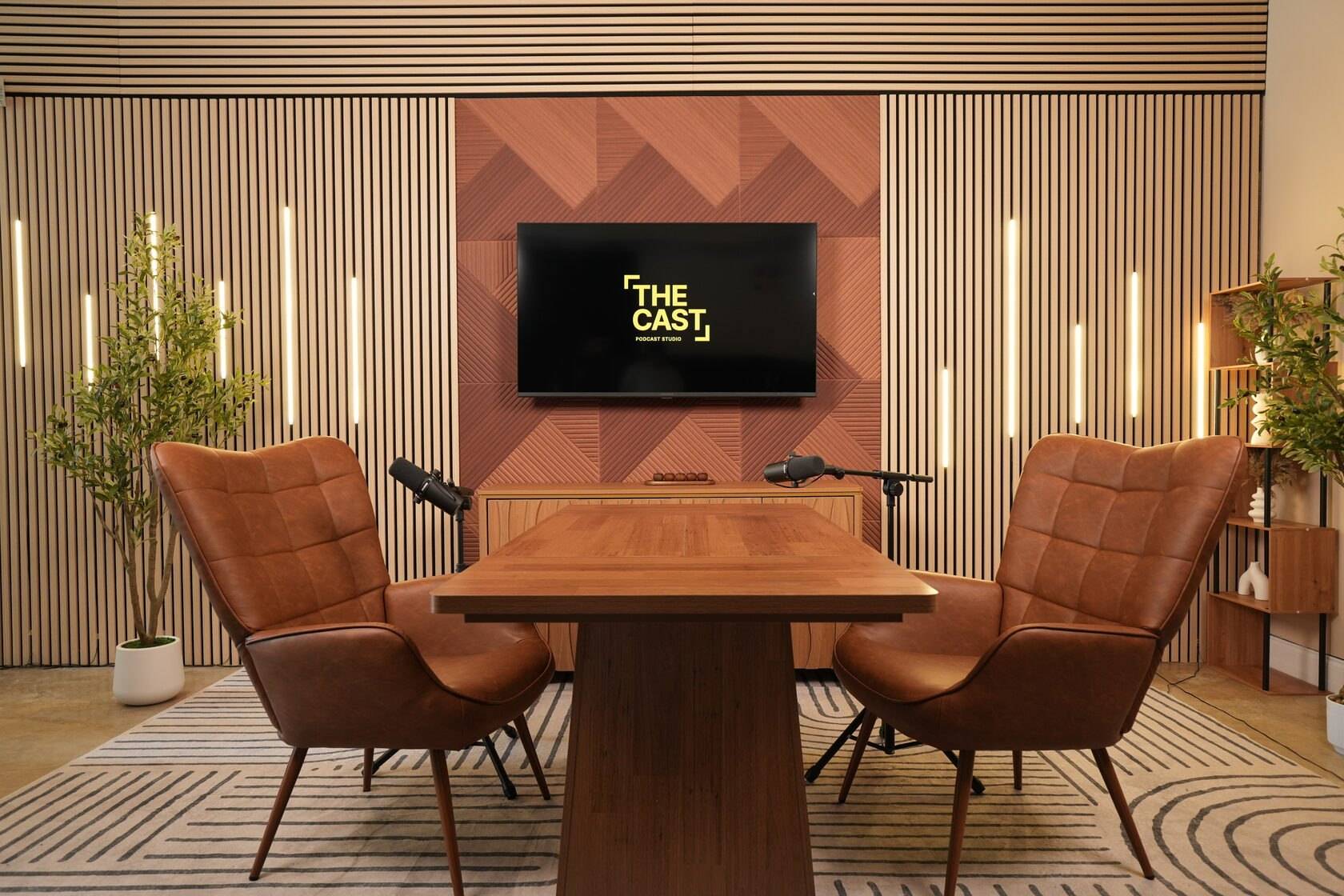
| Interview | Studio #1 or #3 | #1: leather armchairs, LED light bars and a wood panel wall, for professional interviews. #3: black armchairs under warm LED light, for serious talks and expert interviews |
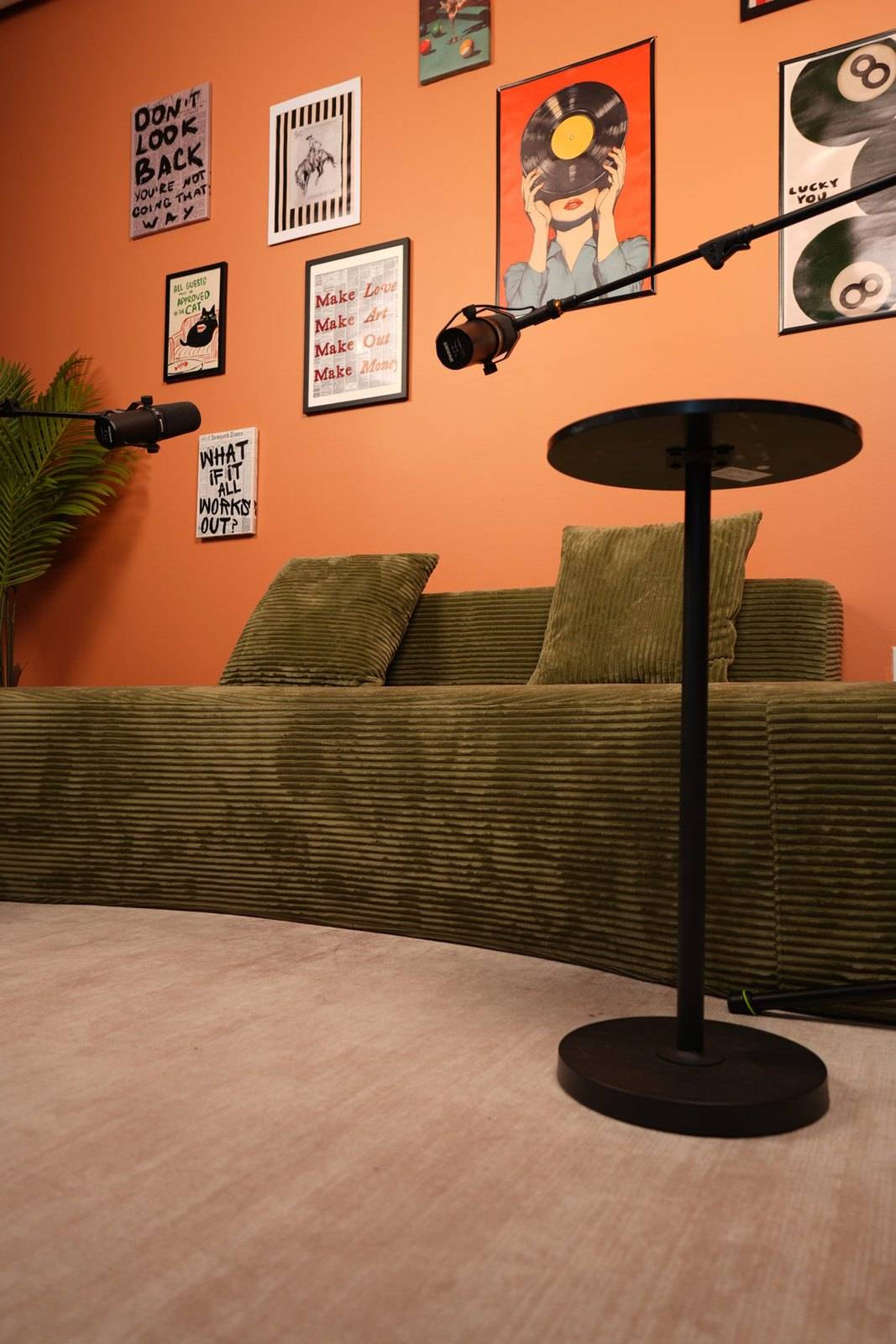
| Co-hosted conversation | Studio #2, #5 or #6 | #2: a soft white designer sofa, for relaxed conversations. #5: a white sofa in front of the LED wall. #6: retro-pop, with an orange gallery wall and a green corduroy sofa, for creative shows |
| Panel | Studio #4 | A wooden table with leather chairs, for group podcasts and panels |
| Narrative | Any set | The studio hour is mostly voice recording, so the set matters only if you film |
| Q&A or hybrid | Match the people on mic | Choose as you would for an interview or a conversation |
Your format also points to a package, priced per hour. Studio Essentials ($199) records one 4K angle with on-site tech assist, which suits solo and educational shows. Studio Recording ($250) adds a full crew, three 4K angles and raw files within 24 hours, which suits interviews and conversations. Studio Recording + Enhanced Edit ($455) delivers a finished 4K multicam edit. Full details are on the podcast studio rental page.
Two Shure microphones are standard. For a panel, start from Studio Recording and ask about extras when you book: two more microphones and inputs for up to five camera angles can be added for a fee.
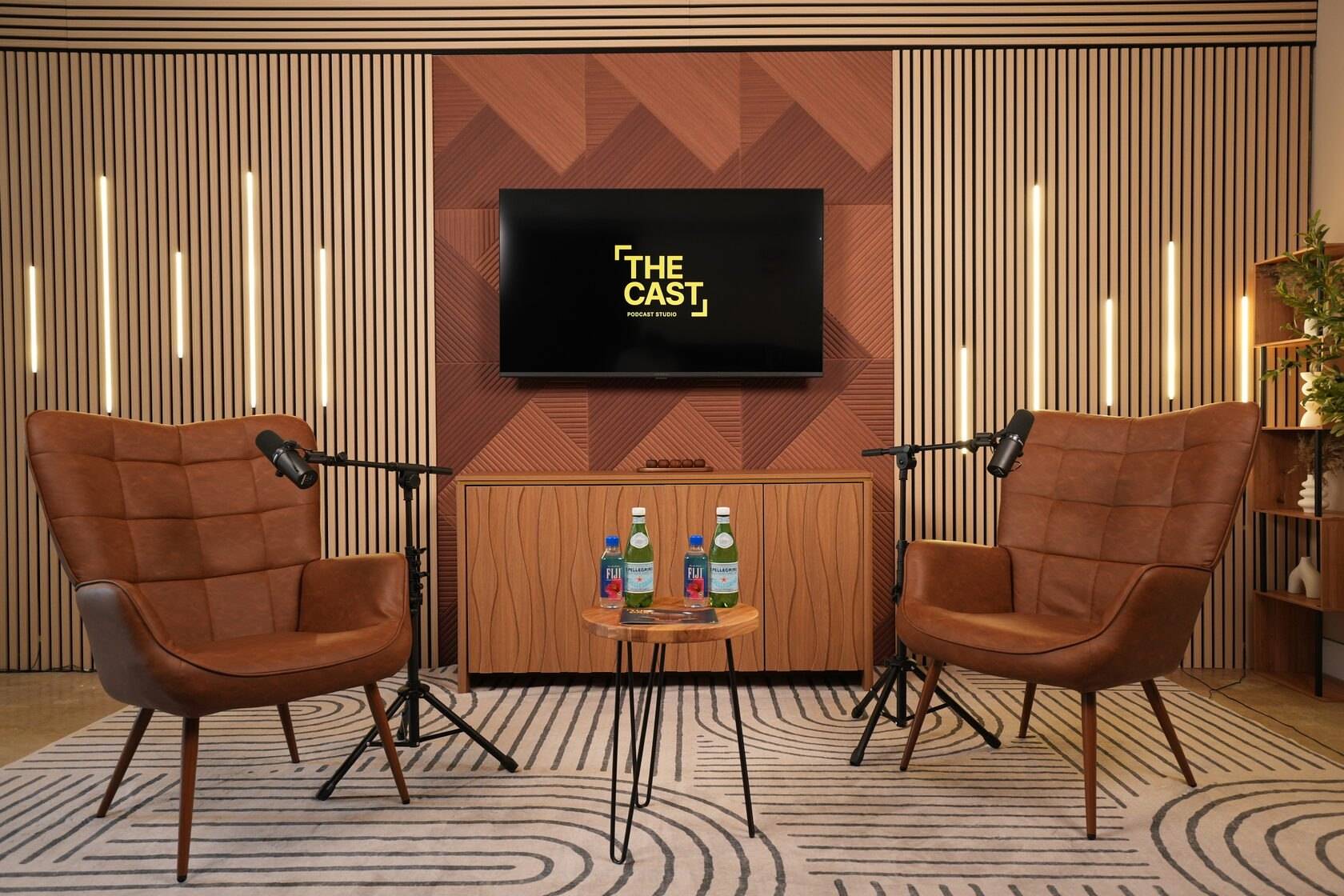
Studio #1: leather armchair set
Premium podcast set with a stylish interior, LED lighting, and a classic interview setup, perfect for professional interviews and video podcasts.
Studio #4: round table set
Professional round-table podcast setup designed for discussions, group podcasts, and panel conversations.
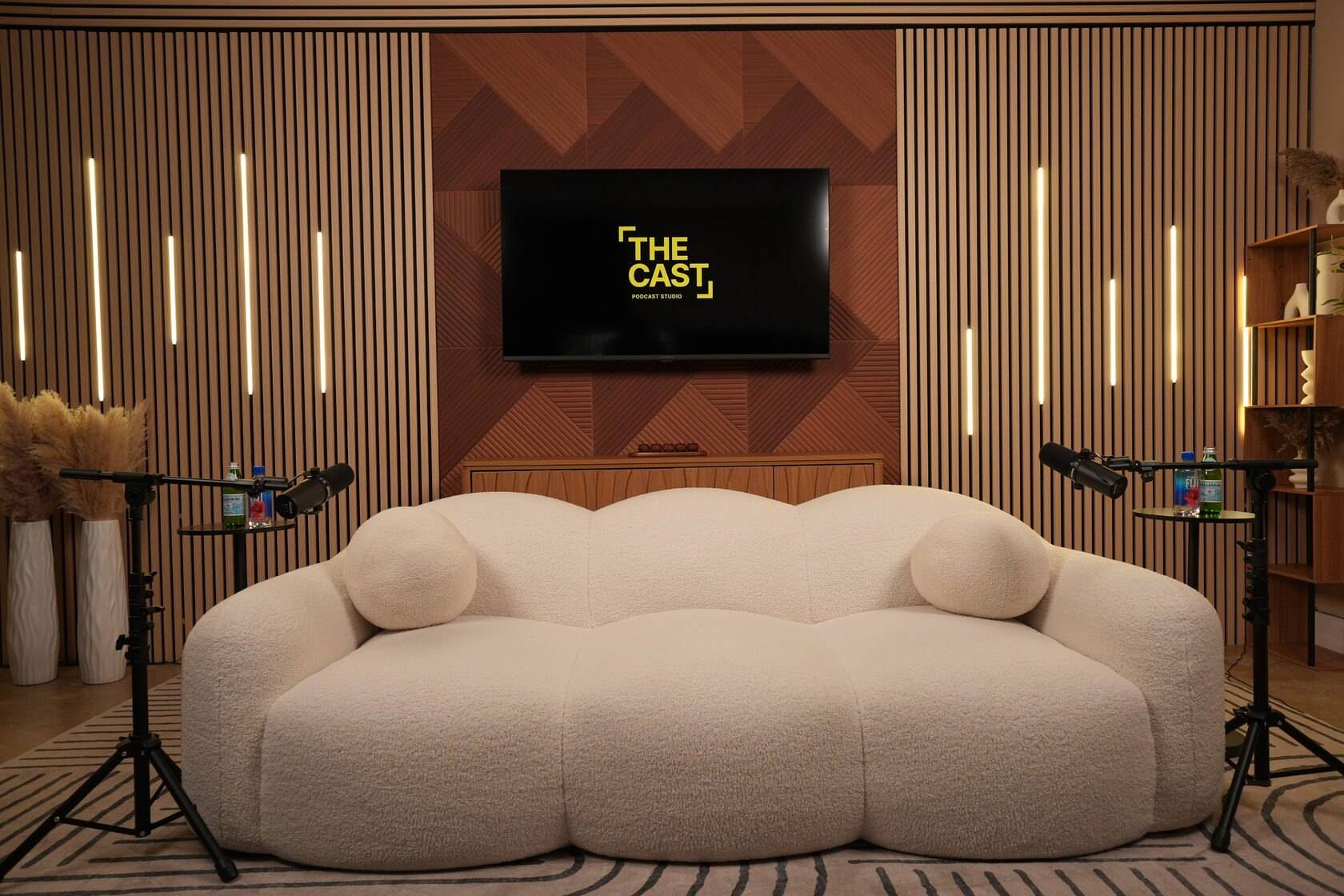
Studio #5: LED wall set
Signature studio set combining the premium LED background with a comfortable sofa, ideal for stylish and relaxed podcast conversations.
You can see all six looks on the sets page. Still comparing studios? See our guide to podcast studios in Fort Lauderdale.
How long should each format run?
A format should run as long as its content stays dense, and no longer. There is no ideal length to copy: what matters is whether every minute carries something the listener came for.
- Solo and educational: one idea or one lesson per episode. Stop when it is explained.
- Interview: as long as the guest has stories worth keeping. Cut the rest in the edit.
- Co-hosted: one topic per episode. When the banter outlasts the topic, end the recording.
- Panel: enough time for every voice on the main questions. Panels drift, so fix the number of questions in advance.
- Narrative: the length of the story, set by the script before you record.
- Q&A: the number of questions you can answer well. Fewer, better answers beat a long list.
- Hybrid: the segment times added up, with each segment held to its limit.
Test it with your audience: publish a few episodes, see where listeners or viewers stop, and shorten what they skip. In a studio, length is also a budget question, because sessions are priced per hour.
Matched your format to a set? Book a session, or take the free studio tour to see all six sets before you decide.
Sources and method
This guide uses no outside statistics. The format descriptions come from the experience of running a podcast and video studio in Fort Lauderdale. The set, package and equipment details come from The Cast Studio's published packages and Terms of Service, checked on October 3, 2026. Prices can change, so confirm them on the booking page.
Frequently asked questions
What is the most common podcast format?
There is no single standard, but interview and co-hosted conversation shows are the formats new podcasters reach for first. Both need only two people, two microphones and a topic, so they are easy to start. A popular format is not always the right one for you, so choose the one you can keep up every week.
Can a podcast have more than one format?
Yes. Many shows mix formats, for example solo episodes between interviews, or a listener-questions segment inside a conversation. Keep the show's promise consistent, meaning the same topic and the same reason to listen, and tell listeners when an episode is different. Plan the studio setup for the busiest format in the mix.
What format works for a business podcast?
Interviews, expert Q&A episodes and panels work well, because they put your customers' questions or other people's expertise at the center instead of your product. A solo expert episode suits teaching a skill. Choose the format your team can record and edit on a regular schedule.
How many people should be on a podcast?
As many as the conversation needs, but each extra voice adds a microphone, a camera angle and editing time. One or two people is the easiest start, and three or more is easier with a moderator. At The Cast Studio, two microphones are standard and two more can be added for a fee.
What format suits a video podcast?
Formats where people talk to each other suit video well: interviews, co-hosted conversations and panels. An interview with three angles, one wide shot and a single of each speaker, holds attention. A solo show can work on one angle. Narrative shows are usually audio first, so video is optional for them.
What is the difference between a podcast format and a genre?
A genre is the topic of your show, such as business, health or sports. A format is how each episode is built: solo, interview, co-hosted, panel, narrative, Q&A, educational or hybrid. Any genre can use any format, and the format decides your studio setup, from microphones and camera angles to editing time.
Written by the team at The Cast Studio, a podcast and video studio at 801 NE 2nd Ave, Ste 120, Fort Lauderdale, FL 33304. Facts and prices are checked on the date shown above. About the studio.